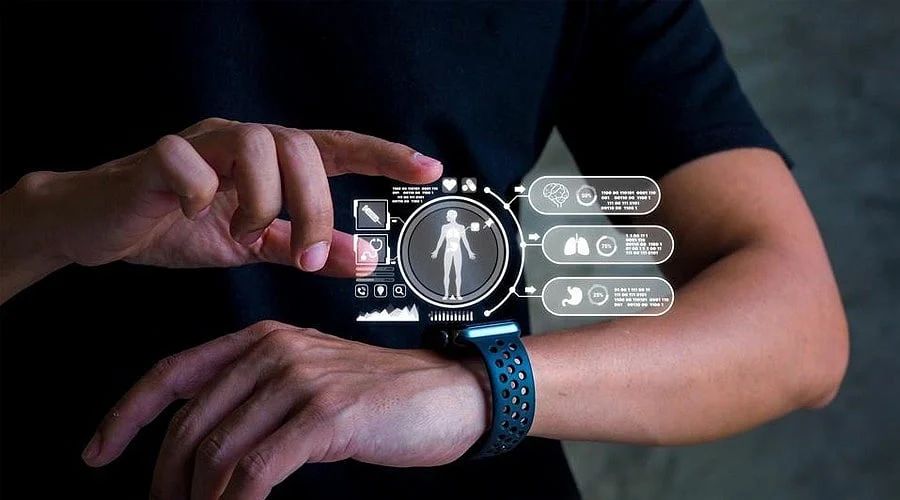
As technology firms launch gadgets capable of recording daily routines, synthesizing dialogues, and interpreting speech, AI-enabled wearables are presenting fresh privacy hurdles. Legal professionals caution that these capabilities might provoke legal issues under state wiretap regulations, regardless of whether the gadgets save actual audio files.
On Thursday, Amazon unveiled the Bee Frontier wearable alongside the Bee Eclipse, a card-shaped gadget. Both offerings aim to gather and evaluate data concerning a user’s daily experiences. Additionally, Apple’s Watch Series 12—revealed in September and slated for release—will incorporate Siri Recap, a tool that logs notes across the day and condenses discussions.
Meta’s smart glasses already possess the capability to record voice notes, video, and pictures. Meanwhile, alternative manufacturers have rolled out compact recording gizmos and wearable pendants intended to assist individuals in sorting information.
This innovation draws in individuals who find daily responsibilities difficult. Pittsburgh business owner Chris Thomas, who utilizes multiple AI wearables, noted that the technology assists him in keeping organized and handling reminders.
‘I’m forgetful AF,’ Thomas said in an interview. ‘My life is so crazy that not having to remember to remember is fantastic.’
Also Read: AI-Powered Wearables in 2026: Advancing Personalized, Preventive Healthcare
Legal Experts Question Consent and Bystander Privacy
The expanding adoption of these gadgets has sparked worries regarding individuals whose discussions might undergo processing sans their explicit agreement. Certain state statutes interpret interception in a wide sense, meaning they might encompass capturing the essence of a dialogue instead of solely generating an audio recording.
Foley Hoag privacy attorney Colin Zick pointed out that the legal standing is still ambiguous for hardware that continuously analyzes speech and generates written synopses.
University of New Hampshire law professor Daniel Pi suggested that state laws might apply to such actions, warning that users could encounter criminal or civil penalties if they process private talks without obtaining necessary consent.
According to former CIA officer Michael Stokes, the dangers go past the people who own the devices. Artificial intelligence can parse massive amounts of gathered data, simplifying the process of recognizing individuals and mapping their connections.
‘We no longer have these pockets of small privacy that we thought we did in the past,’ Stokes said. Apple maintains that Siri Recap avoids saving audio or transmitting recordings back to its servers, while Amazon has likewise asserted that Bee discussions undergo secure processing absent audio storage.