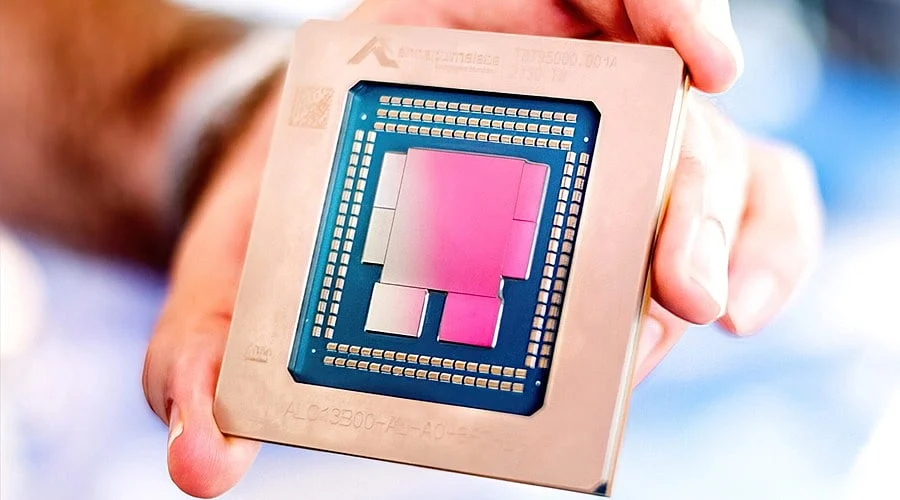
Amazon is working to simplify the process for AI developers looking to utilize its proprietary AI chips rather than depending on NVIDIA. The tech giant is preparing to launch a software utility that enables developers to execute current AI code on Amazon Trainium processors with very few adjustments, which could eliminate a major obstacle preventing companies from changing chip providers.
This new solution, named TorchNeuron, provides compatibility with PyTorch, a popular open-source framework utilized extensively for developing and training artificial intelligence models. Annapurna Labs, Amazon’s chip division, stated that programmers can execute PyTorch code on Trainium hardware by making just a single configuration adjustment, eliminating the need to rewrite entire applications.
Amazon intends to distribute this software as a complimentary, open-source product. This rollout represents yet another strategy by a prominent cloud service provider to contest NVIDIA’s dominance within the artificial intelligence computing sector.
Amazon Wants to Make Switching AI Chips Easier
NVIDIA’s advantage stems from more than just its high-performance graphics processing units (GPUs). Its proprietary CUDA software ecosystem has spent years establishing compatibility throughout various AI development utilities, allowing programmers to execute workloads smoothly on NVIDIA infrastructure.
Transitioning to an alternative hardware architecture typically demands code modifications, rigorous testing, and extra engineering hours. Such hurdles often deter organizations from migrating, even when rival processors present potential financial savings.
TorchNeuron is designed to minimize this engineering burden by permitting developers to utilize standard PyTorch code directly on Amazon’s Trainium chips. The corporation anticipates that this streamlined migration path will prompt a greater number of AI development teams to test its processors.
More Than 30 Early Customers Are Testing the Tool
According to Amazon, upward of 30 early adopters are currently evaluating TorchNeuron. These participants operate across sectors such as robotics, speech-based artificial intelligence, and environmental simulation models that assist AI systems in comprehending and mimicking real-world scenarios.
Colin Brace, vice president of software within Amazon’s Annapurna Labs, informed Reuters that the program aims to minimize the hurdles developers face when testing Amazon’s silicon. Furthermore, he noted that migrating computing tasks to Trainium can yield significant financial savings, though the precise advantages vary based on the specific workload.
Also Read: Amazon’s USD 7 Billion Decart Bid Could Change How AI Models Use Chips
NVIDIA Faces Growing Competition From Cloud Giants
Amazon is far from alone in its efforts to diminish NVIDIA’s stronghold on the AI computing market. Google is similarly creating utilities designed to assist engineers in executing PyTorch workloads on its proprietary AI accelerators. For Amazon, lowering the barrier to entry for Trainium may draw in clients searching for substitutes for NVIDIA equipment. Even so, broader industry uptake will rely heavily on hardware performance, software robustness, and the total cost of operating AI models.
This recent development underscores an escalating rivalry within the artificial intelligence hardware industry, where businesses are vying for market share based both on processor speed and the simplicity of integrating their technology.