

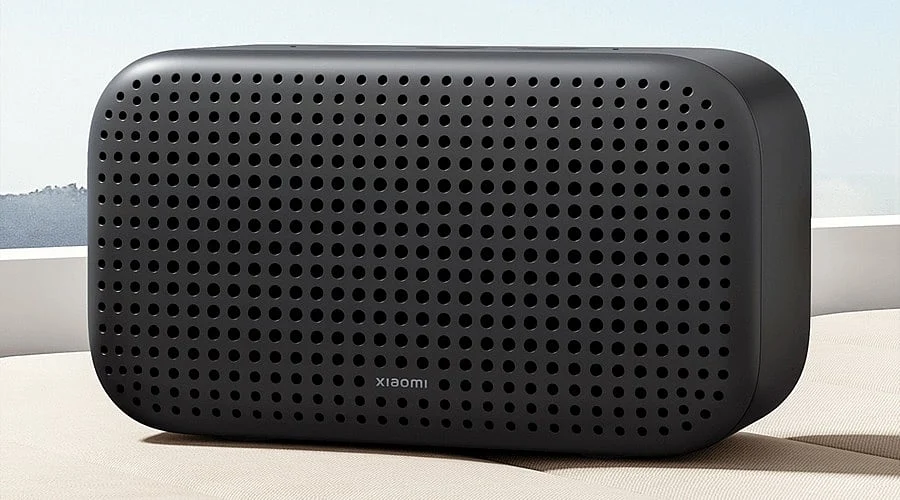
Overview:
-
AI is transforming how users engage with smart speakers in their homes. Conventional models continue to perform well for playing music, setting alarms, answering queries, and executing basic commands.
-
Advanced AI-driven systems are capable of processing extended requests and maintaining context throughout a conversation.
-
Examples of this evolution include Google’s Gemini for Home and Amazon’s Alexa+. Nonetheless, factors such as hardware, acoustic performance, privacy controls, subscription fees, and ecosystem compatibility remain crucial.
Smart speakers have historically functioned as straightforward, voice-activated home helpers, capable of streaming music, responding to questions, setting alarms, and managing connected appliances. The newest generation is expanding far beyond these rudimentary directives. Generative AI is reshaping how these devices comprehend speech and execute instructions, highlighted by Google’s introduction of the 2026 Google Home Speaker featuring Gemini for Home.
Similarly, Amazon is rolling out Alexa+ across its device network. Consequently, the distinction between options increasingly relies less on physical hardware alone and more on what the virtual assistant can comprehend and achieve.
What Makes an AI Speaker Different
Standard smart speaker models typically rely on rigid, pre-established commands, often requiring users to word inquiries in exact ways. In contrast, AI-driven speakers are engineered to interpret much more natural forms of dialogue.
Google’s Gemini for Home accommodates contextual follow-up questions and multi-step directives, allowing users to bundle several actions into a single interaction while the system retains conversational context. This evolution shifts the device from feeling like a basic remote control into a more practical tool for everyday communication and tasks.
However, capabilities vary across different AI-enabled speaker models. Purchasers should verify the specific features supported by any prospective device.
Also Read: OpenAI and Jony Ive Developing Screen-Free AI Smart Speaker
From Voice Commands to Natural Conversations
The most significant transformation lies in conversational engagement. While older assistants generally function best with brief, explicit instructions, modern AI assistants manage lengthier prompts and sequential inquiries with ease. Google indicates that Gemini for Home can interpret intricate, multi-step directions, seamlessly merging media management with connected-home actions.
Amazon’s Alexa+ pursues a comparable path, positioned by Amazon as a generative AI-fueled conversational assistant that aids with shopping, smart-home management, recommendations, and other daily activities. For consumers, this translates to a streamlined experience where attention can remain on the task itself rather than on recalling strict command phrases.
Smart Home Control is Becoming More Intelligent
Smart speakers are increasingly serving as central hubs for connected residences, letting users govern lights, thermostats, security cameras, locks, and entertainment setups via voice. AI introduces an additional layer of sophistication to these operations. Google notes that Gemini for Home can execute multiple smart-home operations from a single prompt, as well as search security camera footage using everyday language.
Additionally, Google launched early access to Home MCP, enabling select third-party AI agents to interface with Google Home hardware. While this points toward greater flexibility in AI-driven home automation, security remains paramount, and users should be aware of which services hold access to their household devices.
Audio Quality Still Matters
Upgraded smarter software does not automatically guarantee superior sound reproduction. A speaker remains, at its core, an acoustic device. Shoppers ought to evaluate room dimensions, unit placement, bass delivery, audio clarity, and multi-room functionality, as dedicated music enthusiasts may prioritize acoustic fidelity over sophisticated assistant functions.
The newest Google Home Speaker pairs Gemini capabilities with 360-degree sound output, and Amazon’s lineup features variants tailored to varying room sizes and listening preferences. Ultimately, the ideal choice hinges on a balance between sound performance and assistant functionality.
Privacy and Subscription Costs Need Attention
Because AI-driven speakers handle much more intricate queries than their predecessors, concerns naturally arise regarding audio recordings, personalization, and data accessibility. Consumers should carefully examine microphone switches and privacy settings prior to activating advanced features, as well as verify whether critical AI capabilities demand a paid subscription.
Google’s Gemini for Home locks certain functions behind Google Home Premium, while Alexa+ implements varying access terms depending on the geographic market and user subscription tier. These recurring costs can alter the overall value proposition of a compelling hardware choice.
Also Read: Best Sonos Smart Speakers to Buy in 2026
Which Speaker Should You Choose?
A traditional smart speaker remains fully capable of handling routine duties such as playing music, running timers, reporting weather forecasts, and executing simple domestic commands. Conversely, an AI-powered speaker suits individuals seeking richer dialogues, where multi-step prompts and contextual replies simplify daily routines.
Shoppers should also weigh their current ecosystem when making a selection; Android users may lean toward Google Home integration, whereas Alexa loyalists likely have compatible hardware deployed throughout their living spaces. Ultimately, the smart speaker is not vanishing; rather, it is evolving, with the core upgrade residing in the intelligence behind the microphone rather than the acoustic enclosure itself.
You May Also Like
Alexa vs Google vs Siri: Best Smart Speakers for Every Home
Best Smart Speakers Under US$200: What’s Hot Now?
AI in Home Entertainment: Smart TVs, Speakers, and More
FAQs
1.What is the difference between a smart speaker and an AI speaker?
A traditional smart speaker generally handles predefined voice commands and basic home tasks. An AI speaker uses more advanced generative AI capabilities. It can understand conversational requests, handle follow-up questions, and process more complex instructions. The exact capabilities vary between products and services.
2.What is Gemini for Home?
Gemini for Home is Google’s AI-powered assistant experience for compatible Google Home devices. It is designed to make interactions more conversational. According to the article, it can support follow-up questions, multi-step requests, and certain smart-home actions through natural language.
3.What is Alexa+?
Alexa+ is Amazon’s conversational AI assistant experience. It uses generative AI to expand what Alexa can understand and accomplish. The article highlights capabilities involving smart-home control, shopping, recommendations, and other everyday tasks. Availability and access arrangements can vary by market.
4.Can AI speakers control multiple smart-home devices?
AI-powered speakers can support more complex smart-home requests. Google’s Gemini for Home can handle multiple actions within a single request, according to the article. These capabilities can include controlling connected devices and combining different actions. Compatibility still depends on the devices and ecosystem involved.
5.Does an AI speaker provide better sound quality?
Not necessarily. AI capabilities and audio performance are separate considerations. Buyers should examine factors such as room size, speaker placement, bass response, clarity, and multi-room support. Someone primarily interested in music may place greater importance on acoustic performance than advanced AI features.


