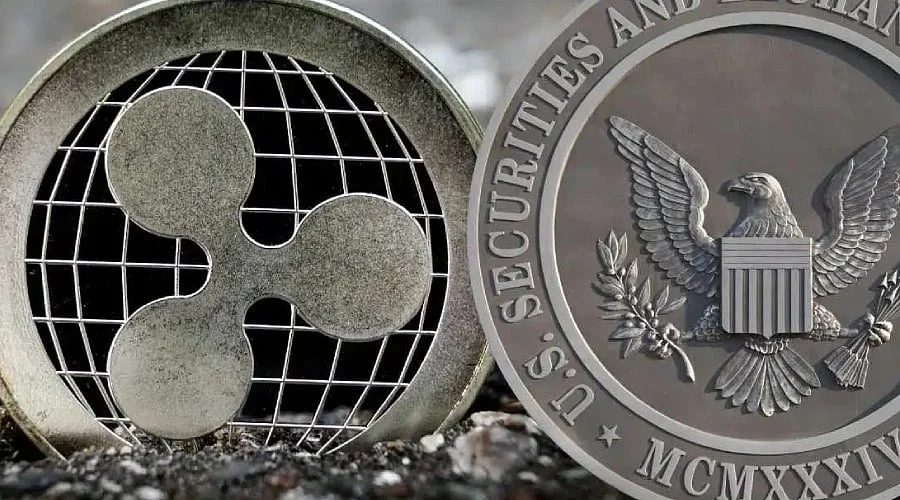
The legal battle between Ripple and the US Securities and Exchange Commission (SEC) emerged as a landmark dispute in cryptocurrency regulation. Although the litigation wrapped up in August 2025, its impact persists in October 2026, especially regarding digital asset definitions, institutional token offerings, and investor safeguards.
How the Ripple-SEC Lawsuit Began
In December 2020, the SEC filed a lawsuit against Ripple Labs alongside executives Brad Garlinghouse and Chris Larsen, asserting that they engaged in unregistered securities offerings involving XRP. The regulatory agency contended that Ripple generated capital via XRP transactions while bypassing mandatory disclosures outlined in federal securities legislation.
The legal conflict hinged on the Howey test, a framework that evaluates whether specific transactions qualify as investment contracts driven by an investor’s expectation of profits generated through the efforts of others. According to court documentation, Ripple executed roughly USD 728.9 million in institutional XRP sales alongside USD 757.6 million in programmatic sales on exchanges.
The 2023 Ruling: Institutional vs Retail Sales
Judge Analisa Torres issued a decision on July 13, 2023, separating the digital asset XRP from the specific contexts surrounding its distribution. The judiciary determined that Ripple’s sales to institutions amounted to unregistered investment contracts because purchasers harbored a reasonable expectation of profits tied directly to Ripple’s operational initiatives.
Conversely, Ripple’s programmatic sales conducted via blind exchange platforms failed to meet these investment-contract criteria based on the evidence reviewed. Specific XRP allocations directed toward employees and network contributors also fell outside the established violations. Most importantly, this ruling stopped short of granting blanket immunity to all subsequent XRP transactions.
USD 125 Million Penalty and Final Resolution
The court issued a civil penalty totaling USD 125,035,150 in August 2024 and barred Ripple from committing future breaches of securities registration mandates. Following this, both parties moved to appeal portions of the verdict.
The SEC announced on August 7, 2025, that the conflicting appeals from both sides had been dismissed, bringing the enforcement proceedings to a close while leaving the initial penalty and injunction intact. This dismissal created no appellate precedent that either reversed or broadened the district court’s rationale.
Implications for Cryptocurrency Regulation
This case highlighted that identical digital tokens can face differing treatment under securities laws depending entirely on the transaction framework and buyer expectations. For exchanges, token creators, and institutional buyers, this delineation impacts disclosure requirements, capital-raising strategies, and compliance frameworks.
Nonetheless, the logic applied by the district court does not automatically govern every digital asset or legal jurisdiction. Alternate courts may assess comparable transactions through a different lens. Furthermore, the evolving enforcement priorities of the SEC emphasize the necessity for explicit legislative guidelines rather than relying entirely on individual judicial proceedings.
Final Thoughts
The conclusion of the Ripple-SEC conflict did not remove securities-law responsibilities for cryptocurrency creators. The primary takeaway is that classifying any token mandates an analysis of specific transaction mechanics, contractual agreements, and investor expectations. Upcoming regulatory shifts will ultimately dictate the extent to which these legal concepts shape the broader US cryptocurrency market.
Also Read: XRP News Today: Ripple Pays $125M Cash Fine as SEC Lawsuit Nears End
FAQs:
1. What was the Ripple vs SEC lawsuit about?
The SEC filed a lawsuit against Ripple Labs in December 2020, alleging that the company conducted unregistered securities offerings through XRP sales. The central dispute concerned whether particular XRP transactions qualified as investment contracts under US securities laws and the Howey test.
2. Did Ripple win or lose the lawsuit against the SEC?
Ripple secured a partial legal victory in July 2023 when the court ruled that its programmatic XRP sales on exchanges did not constitute investment contracts under the circumstances examined. However, the court found that Ripple’s institutional XRP sales violated securities registration requirements, resulting in a USD 125 million civil penalty.
3. When did the Ripple vs SEC lawsuit officially end?
The Ripple vs SEC litigation concluded on August 7, 2025, when both parties dismissed their respective appeals. The original district court judgment remained in effect, including the USD 125,035,150 civil penalty and injunction against future securities registration violations.
4. Is XRP officially classified as a security after the Ripple vs SEC ruling?
The court distinguished XRP as a digital token from the investment contracts that could arise through particular transactions involving it. Institutional XRP sales were found to violate securities registration requirements, while certain programmatic exchange sales did not, meaning the ruling did not establish a universal classification for every XRP transaction.
5. How does the Ripple vs SEC case affect cryptocurrency regulation in 2026?
The Ripple case demonstrates that securities-law treatment can depend on how digital assets are marketed, distributed and sold rather than solely on the tokens themselves. Its outcome provides important guidance for cryptocurrency issuers, exchanges and institutional investors, although broader regulatory certainty still depends on legislation and future court decisions.