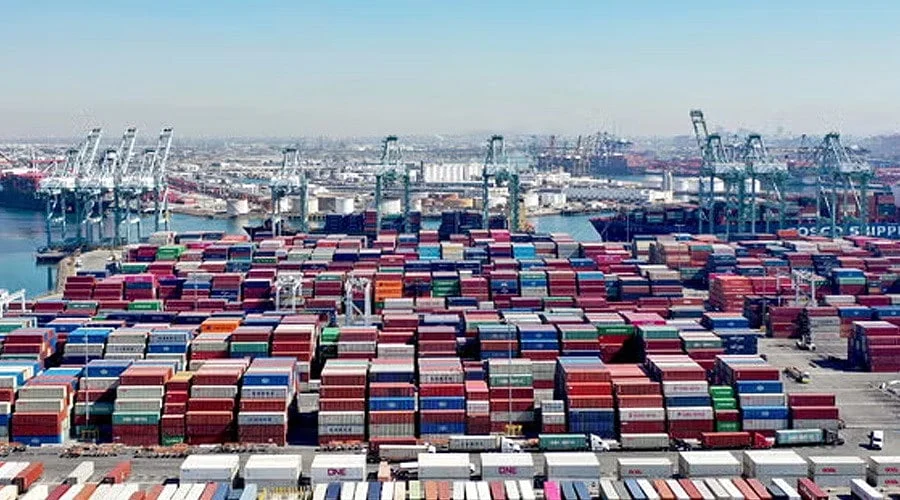
In September, the Port of Los Angeles processed an all-time high of 1.04 million twenty-foot equivalent units (TEUs) driven by a rush of holiday merchandise and alterations in global trade lanes. Gene Seroka, the port’s Executive Director, noted on Friday that reduced tariffs, elevated fuel prices, and limitations at the Panama Canal all contributed to heightened activity at the busiest container hub in the country.
This milestone coincided with total U.S. container imports hitting 2.55 million TEUs for the month, figures reported by Descartes Systems, a supply-chain technology company. Tracking import volumes helps gauge consumer retail habits, commercial inventory levels, and the consequences of shifting trade regulations.
Holiday Orders Lift Imports and Container Traffic
Loaded imports through Los Angeles climbed to 545,696 TEUs, marking a 19% increase compared to September 2025. Concurrently, loaded exports advanced 10% to 125,751 TEUs, while the movement of empty containers reached an unprecedented 371,206 TEUs.
These increases brought the port’s cumulative cargo throughput for the first three quarters of 2026 to almost 8.1 million TEUs, beating the figures from the corresponding timeframe last year by more than 3%.
Robust demand was largely supported by seasonal holiday purchasing. Retailers generate approximately 50% of all container volume. According to projections from the National Retail Federation, U.S. retail sales are on track to climb 4.4% in 2026, reaching USD 5.6 trillion.
Shoppers have maintained their purchasing habits despite climbing expenses for energy and food. Simultaneously, cargo tied to artificial intelligence initiatives—including specialized cooling machinery for data centers—has seen a rise in shipments.
Fuel Costs and Canal Limits Redirect Asian Shipments
Shifts in maritime routes also assisted the Los Angeles port in securing additional traffic. Seroka explained that operational constraints at the Panama Canal persuaded specific ocean carriers operating out of Asia to reroute cargo away from East Coast terminals and toward West Coast facilities.
For merchandise originating in China, shipping via the West Coast cuts down the length of the ocean voyage. Importers additionally opted for shorter transit paths to curb fuel expenditures amid rising energy markets.
At the same time, U.S. import levies have moderated compared to peaks earlier in 2026 and throughout 2025. Seroka pointed out that these reduced rates provided businesses with greater financial predictability, enabling them to replenish inventories more quickly.
Recently, the port has managed higher cargo volumes than it did during the pandemic-related shipping surge while avoiding the severe bottlenecks seen back then, when upwards of 100 ships sat anchored offshore waiting for a berth. Additionally, Vietnam has surpassed other nations to become the second-largest trading partner for Los Angeles, reflecting broader corporate efforts to reevaluate sourcing and manufacturing locations.
Read More: Sony, Microsoft, Nintendo Face Gamer Lawsuits Over Tariff Refunds
Can Shifting Trade Policies Slow the Cargo Surge?
Looking ahead, Seroka anticipates the facility will move roughly 900,000 TEUs in October, sustaining its robust momentum. He remarked that the bulk of merchandise slated for holiday retail is expected to clear U.S. ports by November.
Although cargo activity typically slows down at this stage of the calendar year, Seroka projects that October will stay active. He cautioned that November and December remain difficult to forecast, regardless of the current strength in shipping volumes.
Moreover, policy updates and announcements originating in Washington have the potential to rapidly alter purchasing choices and logistics strategies. Seroka highlighted renewed unpredictability surrounding U.S. governance as a potential hazard for the near-term outlook.
Shih, who analyzed international supply chains alongside Seroka, observed that corporations are placing a higher premium on operational flexibility rather than strictly chasing the cheapest expenses. Enterprises are actively reassessing their procurement regions, manufacturing sites, and delivery destinations.
Shih also highlighted the growing trend of international specialization and the logistical pathways that connect producers to buyers, noting that facilities like the Port of Los Angeles are pivotal in steering those shipments through the worldwide supply network.
Final Thoughts
The Port of Los Angeles achieved a record-breaking September for cargo handling as holiday purchasing, reduced tariffs, and altered shipping corridors boosted throughput. Robust import figures drove nine-month performance figures past those of the previous year. While October traffic is anticipated to remain elevated, upcoming adjustments in trade policy and evolving supply chain networks could shape shipping volumes as the year comes to a close.