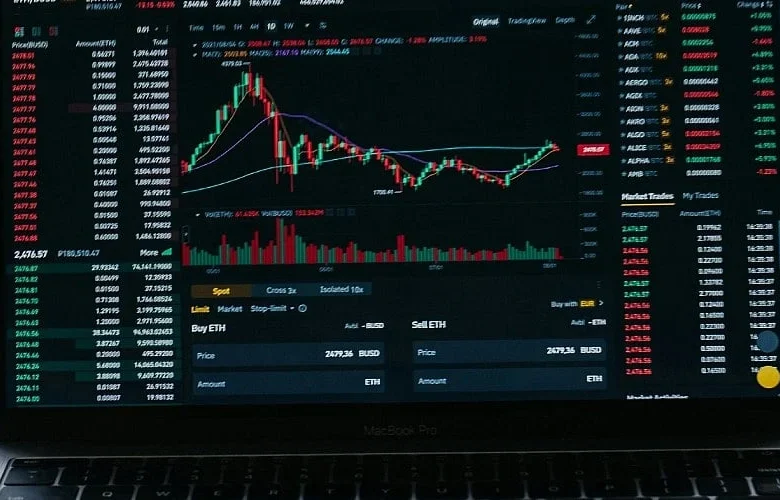
Exchange rates used to be of interest primarily to bankers and importers. Today, anyone holding a smartphone can view live currency values, perform comparisons, and establish alerts in a matter of seconds. Financial technology applications have integrated foreign exchange data into the daily routines of travelers, freelancers receiving income in multiple currencies, students living abroad, and small online businesses.
Simultaneously, fascination with the world’s most robust currencies continues to rise. Users seek to understand why a single Kuwaiti dinar commands a higher price than three US dollars, as well as how to monitor these figures as they shift. This overview details how FinTech platforms monitor powerful currencies and examines the underlying drivers of currency strength.
Why Currency Tracking Moved Into FinTech Apps
In the past, traditional financial institutions published exchange rates just once daily, typically featuring wide spreads. FinTech platforms modernized this process by pulling data directly from interbank feeds and liquidity providers for instant display.
Several prominent examples include:
-
Wise and Revolut: display mid-market rates while allowing users to maintain balances across multiple currencies.
-
XE and OANDA currency converters: provide historical charts and rate notifications.
-
Google Finance and Yahoo Finance: supply rapid conversion calculations and trend metrics.
-
Banking apps: many now present live foreign exchange rates prior to the execution of international money transfers.
These applications operate via APIs that refresh every few seconds, granting everyday users access to data that previously required professional trading terminals.
What Makes a Currency Strong
When individuals search for the strongest currency in the world, they generally refer to the legal tender boasting the highest exchange value relative to the US dollar. However, nominal unit value represents only one piece of the puzzle. Several other conditions explain why certain currencies maintain their strength:
-
Substantial reserves and trade surpluses: nations that export more goods than they import—particularly petroleum producers—enjoy consistent demand for their currency.
-
Economic and political stability: investors favor monetary units originating from dependable regions.
-
Minimal inflation: a currency that preserves its purchasing power remains attractive to capital markets.
-
Prudent monetary policy: central banks that effectively administer interest rates or currency pegs help sustain a currency’s value over the long term.
-
Limited money supply: fewer units circulating in the economy can help maintain a high value per individual unit.
It is also worth noting that a high unit value does not automatically signal a superior economy. Japan’s yen features a low per-unit value, yet it is supported by one of the planet’s largest economic systems.
The Kuwaiti Dinar: Oil Wealth and a Managed Peg
The Kuwaiti dinar (KWD) has maintained the leading position for years, trading at approximately 3.2 to 3.3 US dollars per dinar. Significant petroleum exports generate massive foreign reserves for Kuwait, and the Kuwait Investment Authority operates one of the oldest sovereign wealth funds globally.
Instead of pegging exclusively to the US dollar, the Central Bank of Kuwait anchors the dinar to an undisclosed basket of currencies. This approach maintains stability and has protected the currency’s valuation across decades.
The Bahraini Dinar: A Stable Dollar Peg
The Bahraini dinar (BHD) typically secures the second position, pegged at roughly 2.65 US dollars. Bahrain links its currency directly to the greenback, providing trade and financial operations with a steady, predictable exchange rate.
Furthermore, Bahrain has established itself as a regional FinTech center. The Central Bank of Bahrain oversees a regulatory sandbox and provides backing for Bahrain FinTech Bay, which fosters emerging open banking and digital payment initiatives.
The Swiss Franc: Strength Through Stability
The Swiss franc (CHF) does not boast the highest per-unit valuation, but it is widely regarded as among the most dependable. Switzerland benefits from low inflation, a robust banking sector, political neutrality, and a long tradition of sound monetary management.
When financial markets experience volatility, investors frequently channel funds into the franc as a safe-haven asset. The Swiss National Bank occasionally intervenes to prevent the franc from appreciating excessively, as an overly expensive currency can harm Swiss export businesses.
Other Currencies That FinTech Users Watch Closely
The top three units are not the only powerful currencies appearing on user watchlists. The Omani rial (OMR) and the Jordanian dinar (JOD) likewise trade above the US dollar, bolstered by dollar pegs and disciplined central bank oversight. Meanwhile, the British pound (GBP) stands as one of the premier free-floating currencies, and both the euro (EUR) and US dollar (USD) command global trade and reserve assets.
This broader perspective is vital for application users. A freelance worker paid in pounds, a student residing in Switzerland, or an enterprise purchasing merchandise from the Gulf region will monitor entirely different currency pairs. Effective FinTech applications allow individuals to construct tailored watchlists so that relevant currencies appear prominently, alongside daily percentage shifts and straightforward trend indicators.
How FinTech Tools Turn Currency Data Into Insight
Contemporary applications offer functionality that extends well beyond displaying a solitary figure. Useful capabilities include:
Certain platforms also leverage machine learning to flag unusual price movements or synthesize news events driving a rate change, assisting users in understanding the catalysts behind a shift rather than merely observing the price update.
Tips for Following Strong Currencies Responsibly
While financial technology simplifies the tracking process, adhering to specific practices helps users make more informed decisions:
-
Contrast mid-market exchange rates against the rate applied to an actual funds transfer.
-
Inspect associated fees, recognizing that a “zero commission” provider may incorporate a wider spread.
-
Consult historical charts rather than reacting impulsively to short-term daily fluctuations.
-
Keep in mind that pegged units like the Bahraini dinar exhibit minimal movement against the US dollar.
-
View currency metrics as informative data rather than assurances of future value.
Conclusion
FinTech applications simplify the real-time monitoring of the world’s strongest currencies. Multi-currency wallets, conversion calculators, and data APIs demonstrate how the Kuwaiti dinar, Bahraini dinar, and Swiss franc retain their purchasing power. Factors such as petroleum wealth, steady currency pegs, and prudent governance preserve their strength. Understanding the drivers of currency strength—including reserves, inflation rates, and monetary strategy—allows individuals to interpret these figures accurately. When utilized effectively, these instruments transform chaotic exchange rate feeds into concise, practical insights for everyday financial choices.