Overview :
-
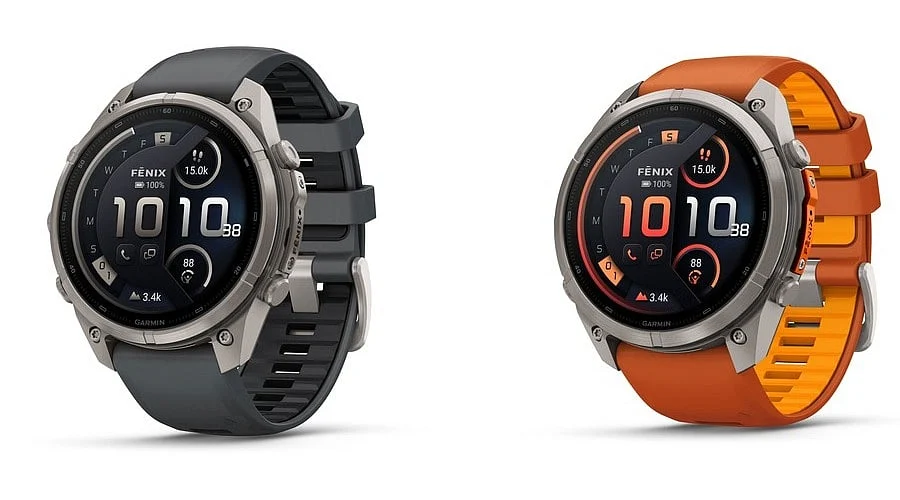
The Fenix 9 introduces a brighter AMOLED screen, more RAM, quicker map rendering, and new training tools.
-
The Fenix 8 is available in both AMOLED and Solar variants, boasting robust battery life.
-
Both devices are designed for athletes focused on advanced outdoor navigation, fitness tracking, and multisport performance.
Building upon the Fenix 8, Garmin’s Fenix 9 delivers enhancements across its display, internal components, mapping, storage capacity, and training capabilities. This latest iteration preserves the tough multisport orientation of the Fenix lineup while bringing targeted updates for runners, athletes, and outdoor enthusiasts.
Offered in 43mm, 47mm, and 51mm sizes, the Fenix 9 starts at USD 999.99. According to Garmin, the 51mm edition provides a battery life of up to 29 days when used in smartwatch mode. Meanwhile, the Fenix 8 continues to be sold in both Solar and AMOLED screen configurations, depending on the specific model chosen.
Fenix 9 vs Fenix 8: Key Differences
Brighter Display on Fenix 9
The screen represents one of the most prominent visual upgrades made by Garmin. Featuring an AMOLED panel, the Fenix 9 is stated by the company to be twice as luminous as its predecessor, the Fenix 8.
This increased brightness ensures that details are simpler to view outdoors—particularly when users need to check navigation details or training metrics. Additionally, the Fenix 9 incorporates a scratch-resistant sapphire crystal lens and a dive rating reaching up to 40 meters.
More Memory for Faster Performance
Under the hood, the Fenix 9 receives a performance boost with 50% greater RAM capacity than the Fenix 8. Garmin combines this expanded memory with a refreshed map engine.
As a result, the manufacturer notes that map panning operates up to 30% faster. Furthermore, the smartwatch adds a new perspective view mode, which supplies added detail surrounding the user’s present location as well as further along the mapped route.
For individuals who lean heavily on maps during running, hiking, or other outdoor excursions, these adjustments are engineered to deliver more responsive navigation rather than deploy an entirely brand-new mapping platform.
Storage Doubles to 64GB
Storage capacity marks another major distinction between the two device generations. The Fenix 9 ships with 64GB of internal space, doubling the 32GB found on comparable models of the Fenix 8.
Garmin states that this extra room allows users to retain twice as many maps. It also accommodates up to 7,000 downloaded songs, granting expanded space for offline audio playback when working out without a smartphone nearby.
New Tools for Tracking Stamina
Debuting on the Fenix 9 are stamina zones alongside a stamina curve. These tools supply deeper endurance insights during training sessions, updating dynamically according to historical training data and personal fitness progress.
This addition broadens Garmin’s existing suite of training analytics, giving athletes another method to gauge how their physical endurance fluctuates throughout individual workouts and across extended periods.
Rucking Gets Expanded Support
Garmin has likewise broadened the rucking functionalities on the Fenix 9. Participants can adjust their pack weight mid-activity and execute GORUCK workouts straight from the wearable.
The watch accommodates target-oriented rucking routines with cargo loads scaling up to 100kg. This elevates the feature beyond basic workout logging, enabling users to account for shifting weights throughout their training regimen.
Also Read: Smartwatch Deals Before Amazon Great Indian Festival: 5 Picks Up to 60% Off
Additional Data for Indoor Rowing
Indoor rowing participants also gain fresh metric choices with the Fenix 9. When synchronized with compatible rowing apparatus equipped with power meters, the timepiece can yield VO2 Max and power curve statistics.
This capability enriches indoor rowing workouts with advanced performance data, expanding the device’s utility past traditional outdoor disciplines.
Garmin Epic Brings Activities Together
Another addition to the Fenix 9 is Garmin Epic, a function that consolidates workouts compiled over days, weeks, or months into a unified presentation inside the Garmin Connect ecosystem.
Along with exercise records, Garmin Epic can merge performance and health statistics with imagery. Users are then able to share these compiled Epics with family and friends.
Battery Life Remains Similar
Power longevity does not experience changes as dramatic as those seen in processing or storage capacities. The 51mm Fenix 9 delivers up to 29 days of operation in smartwatch mode.
By comparison, the Fenix 8 still provides Solar options, where the 51mm Solar edition is rated for as many as 30 days—stretching up to 48 days when utilizing solar harvesting under specific conditions outlined by Garmin.
Consequently, battery endurance fluctuates depending entirely upon which Fenix 8 configuration is measured against the Fenix 9.
Also Read: Top Smartwatches with Bluetooth Calling and Voice Assistant Features
Fenix 9 vs Fenix 8: The Main Upgrade Areas
Rather than overhauling the overarching design ethos of the lineup, the Fenix 9 concentrates on refining various facets of the Fenix experience. The primary divergences encompass the higher-luminosity AMOLED display, expanded RAM, 64GB of storage space, accelerated map responsiveness, and novel training functions.
While the Fenix 8 continues to offer AMOLED alongside Solar choices, the base Fenix 9 centers entirely on AMOLED technology. The newer timepiece also incorporates Garmin Epic, upgraded rucking utilities, and fresh metrics for indoor rowing.
For current owners of the Fenix 8, choosing between the two options therefore hinges on whether the updated display tech, storage space, navigation upgrades, and training additions align with their specific requirements. For first-time purchasers, these specifications clearly separate Garmin’s prior flagship tier from the newer Fenix 9 architecture.
FAQs
1.What is the biggest difference between Garmin Fenix 9 and Fenix 8?
The Fenix 9 presents a brighter AMOLED screen, 64GB of storage, a 50% increase in RAM, swifter mapping execution, and upgraded training capabilities.
2.Does Garmin Fenix 9 offer better battery life than Fenix 8?
Not by a substantial margin. The 51mm Fenix 9 reaches up to 29 days, whereas the 51mm Fenix 8 Solar reaches up to 30 days.
3.How much storage does Garmin Fenix 9 have?
The Fenix 9 features 64GB of built-in storage, capable of holding twice the quantity of maps and up to 7,000 music tracks.
4.What new fitness features come with Garmin Fenix 9?
The Fenix 9 brings stamina zones, a stamina curve, enhanced rucking utilities, and extra indoor rowing performance metrics.
5.Does Garmin Fenix 8 still offer Solar charging?
Yes, eligible Fenix 8 models support Solar charging, whereas the standard Fenix 9 relies exclusively on AMOLED.