

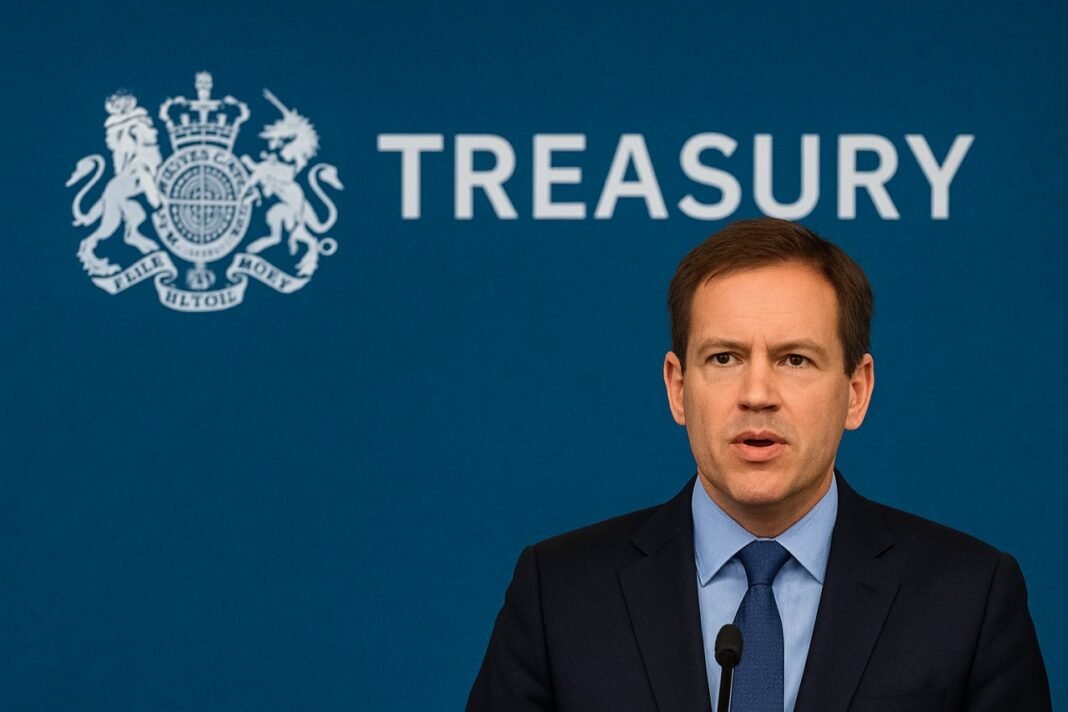
In London’s marble corridors and on the screens of late-night policy briefings, a quiet recalibration is underway. The UK Treasury is working on a new playbook—one designed not to tame cryptocurrency completely, but to finally fold it into the grammar of mainstream finance. After months of consultation papers, closed-door conversations with industry players, and political back-and-forth, the government is preparing a sweeping regulatory framework to police the crypto markets.
The aim is straightforward in theory: establish clear oversight for exchanges, stablecoins, and digital asset service providers operating on British soil. In practice, it could redraw the map of where global crypto business gets done.
The post-chaos mandate
The timing isn’t accidental. The memory of FTX’s implosion still lingers in regulators’ minds—a parable of tech exuberance colliding with financial physics. Across the Atlantic, the U.S. has opted for litigation as policy, while the European Union has already codified its MiCA framework. Britain, true to form, seems to want something in between: a rules-based regime that encourages innovation but draws hard lines against what one Treasury source described as “the just-trust-me era.”
What’s emerging, insiders say, is a system of tiered supervision. Exchanges and custodians would need authorization akin to traditional investment firms, while stablecoin issuers and DeFi protocols may be brought under existing payment systems oversight. Anti–money laundering and consumer protection are the opening chapters, but future provisions look set to reach deeper—addressing market manipulation, advertising integrity, and proof-of-reserves requirements.
A draft circulated among select fintech advisors hints at mandatory inclusion in the Financial Services and Markets Act perimeter, effectively turning crypto trading platforms into registered financial entities. It’s ambitious, bureaucratic, and—if executed cleanly—potentially transformative.
Innovation theater meets real oversight
Here’s the paradox Westminster must navigate: crypto is both an economic opportunity and a regulatory headache. Billions of pounds in potential tax revenue and tech investment depend on the UK positioning itself as a hub for digital assets. Yet every new headline about fraud or collapse drags that vision back into skepticism.
Treasury Minister Bim Afolami has been delicate in tone—talking about “responsible competitiveness” rather than “crackdown.” But the intent is there. The Financial Conduct Authority (FCA) already extended its anti–money laundering regime to crypto companies last year, and the Bank of England continues to study stablecoin issuance risks with the cadence of a central banker preparing for a very new world.
The tricky part? Balancing accessibility with accountability. If rules swing too tight, the startups fueling UK Web3 innovation might simply pack up and relocate—Portugal, Dubai, and Singapore are still rolling out the welcome mat. Too loose, though, and regulators risk another repeat of the “crypto cowboy” era that burned retail investors and scarred policymakers alike.
“The goal is not to freeze innovation,” said one person familiar with the Treasury’s discussions. “It’s to make innovation compatible with public trust.”
A measured, British kind of pragmatism
You can feel Britain’s instinct to regulate through refinement rather than revolution. The conversations inside the Treasury reportedly borrow from both MiCA’s disclosure-based model and the FCA’s conduct-based frameworks, blending continental compliance with London’s own financial conservatism. Think less crypto Wild West, more digital Canary Wharf.
One intriguing development is the proposed role for crypto asset custodians, who could be required to hold assets under stricter segregation rules to ensure customer protection in the event of insolvency. Another is stress testing for stablecoins, forcing issuers to prove 1:1 reserves and publishing independent attestations—something the Bank of England has quietly advocated since the Terra collapse of 2022.
Even DeFi isn’t entirely escaping scrutiny. Officials are weighing how protocols can be held to account if governance or token issuance conveys operational control—an acknowledgment that even decentralized systems have human fingerprints somewhere in the code.
The market reaction
Crypto executives in London are watching with cautious optimism. “This is the closest we’ve seen to a grown-up conversation between regulators and builders,” said the policy head of a major exchange operating in the UK. “Everyone wants clarity—even if that means stricter reporting.”
Market watchers believe the proposed regime could ultimately boost confidence in institutional participation, particularly for compliant tokenization projects, digital securities trading, and fund token offerings. If banks and pension funds see a clear legal path into blockchain-based instruments, liquidity could follow fast.
Still, beneath the optimistic soundbites, nerves remain. The FCA’s reputation for enforcement-first action has businesses wary of overreach. And no one’s yet sure how the courts will interpret digital assets under the UK’s property law revisions, which are expected to be tested soon after the new framework is enacted.
London’s chance to lead again
For all the questions, the opportunity feels real. Post-Brexit, London has been searching for fresh ground to reassert its global financial primacy. Becoming a credible jurisdiction for regulated crypto finance—with institutional trust and startup dynamism coexisting—might just be the way back.
If the Treasury can pull it off, it could position the UK as the world’s first serious bridge economy for blockchain: open like Singapore, rule-bound like Switzerland, and trusted like the City itself once was at its height.
It’s worth remembering: Britain historically excels at structuring the unstructured—shipping lanes, commodities markets, derivatives. Crypto, in all its volatility, might simply be the latest chaos in need of British order.
And somewhere deep inside Whitehall, between the spreadsheets and the circular memos, the new rules are being drafted line by careful line. The revolution, as usual, is happening in paperwork first.